What affects the job
Concrete scope changes with demolition, forms, excavation, base prep, reinforcement, slab thickness, finish, drainage, access, pumping, weather, and whether the concrete is decorative, structural, or purely functional.
Details to gather before requesting pricing
Useful details include photos, rough measurements, site access, slope, drainage problems, existing concrete condition, finish preference, desired timeline, and whether engineering or permits may be involved.
Park City planning notes
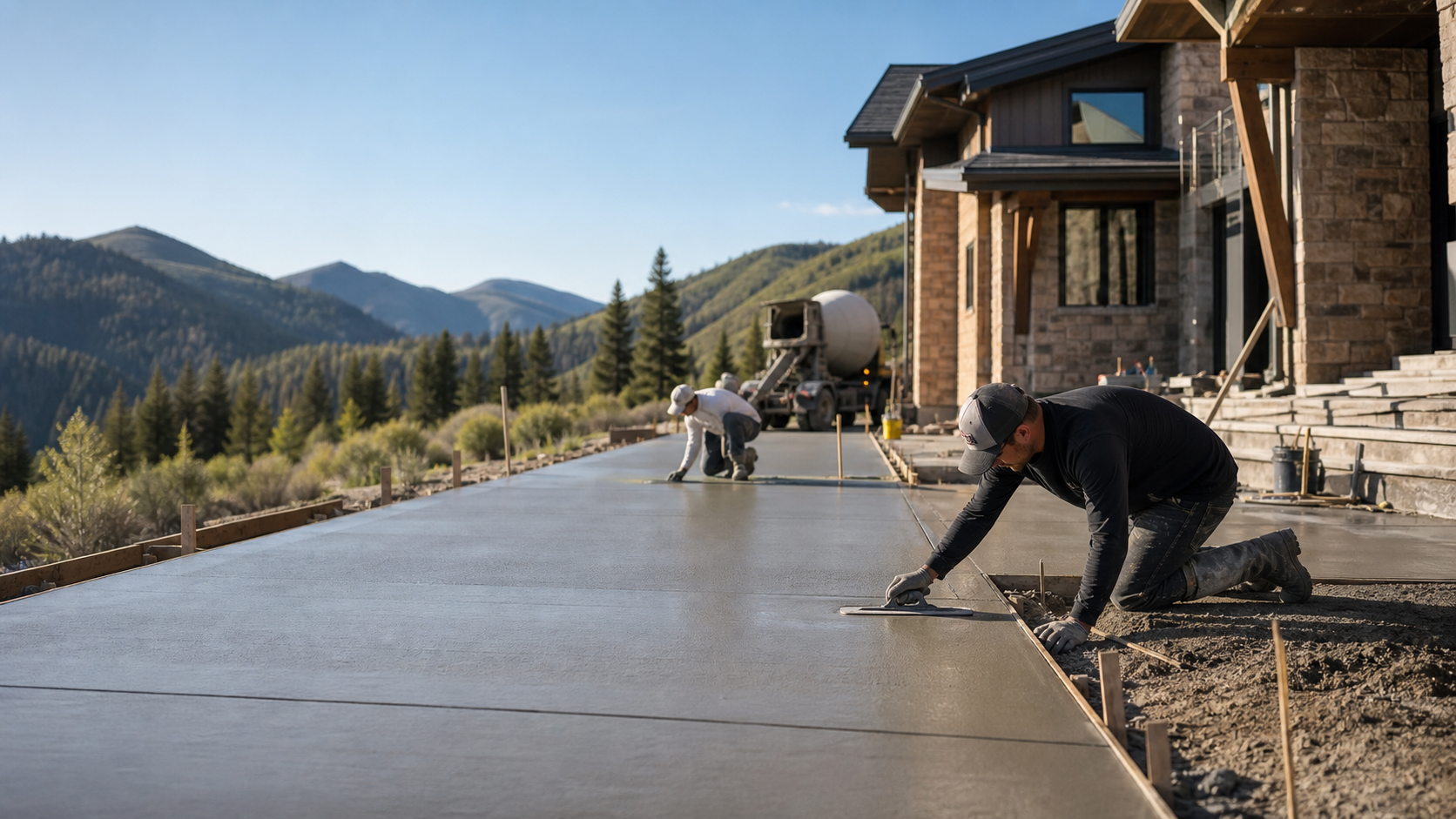
Mountain properties can add steep driveways, tight equipment access, retaining needs, winter curing concerns, high-end finish expectations, and schedule pressure around remodels, rentals, and second-home visits.
Questions that separate comparable bids
Before comparing a low number against a higher one, ask each provider to define the same scope. For a driveway or driveway replacement, that means demolition depth, haul-off, subgrade correction, compacted base, thickness, reinforcement, control-joint layout, drainage, curing plan, and how transitions to the garage, road, or walkway will be handled. For patios, sidewalks, flatwork, and slabs, ask whether the quote includes excavation, forms, base, finish, saw cuts, sealing, cleanup, and protection around landscaping or finished exterior surfaces.
For stamped concrete, decorative patios, retaining walls, or foundation-wall work, ask what requires a specialist, engineering review, inspection, or a separate drainage plan. Park City projects can also need answers about steep access, snow-removal wear, deicer exposure, freeze-thaw movement, narrow staging, owner travel schedules, HOA timing, and whether concrete pumps or smaller equipment are needed. A useful bid should make those assumptions visible instead of leaving them for the day work starts.
Good comparison questions include: what prep is excluded, what would trigger a change order, how drainage will move water away from the slab or wall, what finish is realistic for the use, how long the surface should be protected before vehicles or furniture return, and what information the contractor needs from photos, measurements, slope, access, and timeline. Those answers make the concrete cost conversation clearer and help decide whether the request belongs with a general concrete contractor, a driveway replacement crew, a foundation wall specialist, or a stamped concrete provider.
Questions specific to Park City's elevation and climate
Ask whether the mix design includes air entrainment for freeze-thaw resistance, since most Park City properties sit above 6,900 feet and see more annual freeze-thaw cycles than lower-elevation markets. Ask how the contractor handles deicer and chloride exposure on driveways and walkways, what base depth and compaction they use on slopes, and how they plan around the shortened mountain pour season, which often runs late spring through early fall before schedules slow down for winter.
Questions about heated driveways and snowmelt
If a heated driveway or snowmelt patio is even a possibility, ask early, since the tubing or cable has to be embedded before the pour. Useful questions include whether the contractor has installed hydronic or electric snowmelt systems before, how the system is zoned, who supplies and services the boiler or control unit, and how snowmelt changes slab thickness or reinforcement. The heated driveway and snowmelt guide has a fuller list of planning questions.
Questions about permits, licenses, and local resources
Ask who is responsible for checking whether the project falls under Park City, Summit County, HOA, or private-road requirements, especially for retaining walls, foundation walls, driveway aprons, major drainage changes, and work near a road edge. For any provider you are seriously considering, ask for the legal business name, license information, insurance status, and who will be onsite. Independent resources such as Utah's contractor licensing lookup, city or county building departments, and HOA design rules can help you verify the basics before work starts.
Questions for HOA and custom-home projects
In communities such as Promontory, Deer Valley, and Canyons Village, ask whether the contractor is familiar with the HOA's architectural review process, what finish and color options typically get approved, and whether construction-traffic timing is restricted. For new construction tied to a custom-home build, ask how foundation, garage slab, driveway, and patio pours are sequenced against the rest of the build schedule.