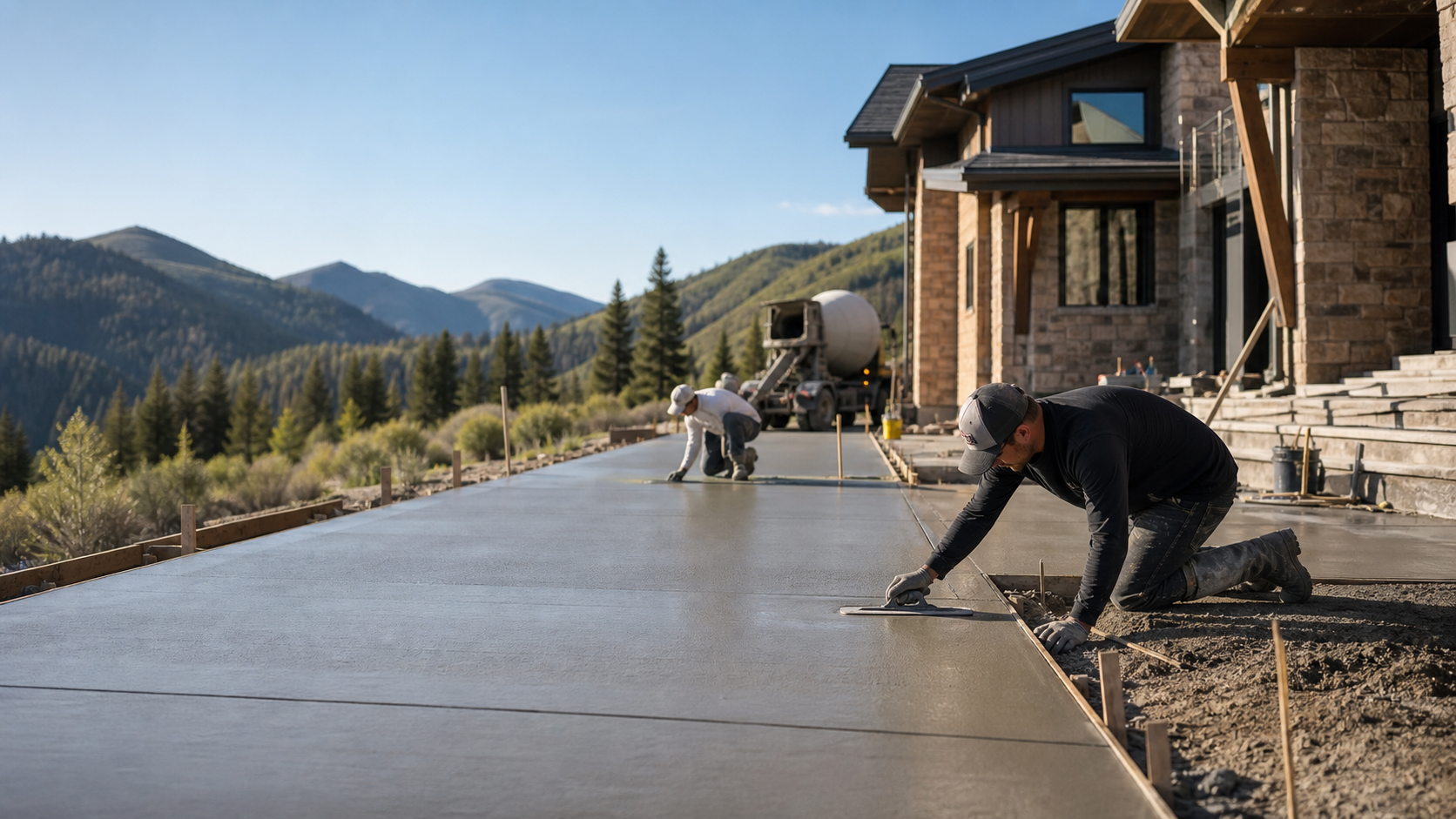
What affects the job
Concrete scope changes with demolition, forms, excavation, base prep, reinforcement, slab thickness, finish, drainage, access, pumping, weather, and whether the concrete is decorative, structural, or purely functional.
Details to gather before requesting pricing
Useful details include photos, rough measurements, site access, slope, drainage problems, existing concrete condition, finish preference, desired timeline, and whether engineering or permits may be involved.
Park City planning notes
Mountain properties can add steep driveways, tight equipment access, retaining needs, winter curing concerns, high-end finish expectations, and schedule pressure around remodels, rentals, and second-home visits.
Hydronic versus electric snowmelt systems
Hydronic snowmelt circulates a heated water-and-glycol mix through PEX tubing embedded in the slab, powered by a boiler or a heat-pump-based system. It generally costs more to install but is more efficient to run for large driveway areas, which makes it the common choice for full driveways and motor courts on Park City custom homes. Electric snowmelt uses resistance cable instead of tubing, has a lower installation cost, and is usually a better fit for smaller areas such as entry walks, steps, or a single parking pad rather than an entire long driveway. The right choice depends on the size of the heated area, how the property is used, and whether a boiler already serves the home for radiant heat elsewhere.
Zoning the slab and controlling operating cost
Most snowmelt systems are zoned so only part of the driveway runs at a time, for example the section nearest the garage or the steepest, most exposed stretch, rather than heating the entire surface continuously. Snow sensors and slab sensors can automate the system so it activates only when snow is actually falling and temperatures are near freezing, which controls energy use significantly compared to running the system on a fixed schedule. Discuss zoning and controls as part of the design, not as an afterthought, since the tubing or cable layout has to match the planned zones before the pour.
New construction versus retrofitting an existing driveway
Adding snowmelt to a new driveway pour is far simpler than retrofitting an existing one, since the tubing or cable is placed on the base and secured before concrete goes down. Retrofitting an existing driveway generally means removing and repouring the slab, which is why many owners choose to add heating during a planned driveway replacement rather than as a standalone project. On a new construction custom home, snowmelt is often planned alongside the driveway, entry walk, and sometimes a patio section from the start of design.
How snowmelt changes the concrete itself
A heated slab still needs to be designed for the vehicle loads, slope, and freeze-thaw exposure of a normal Park City driveway, with the added consideration of slab thickness and cover over the tubing or cable, correct insulation beneath the system to direct heat upward rather than into the ground, and control-joint placement that avoids cutting through embedded lines. An experienced installer will coordinate the concrete pour with the mechanical contractor who runs and pressure-tests the hydronic lines or terminates the electric cable, since damage to the system during the pour is expensive to fix after the fact.
Drainage, runoff, and access review
Snowmelt can move water at times when nearby unheated pavement is still below freezing, so drainage planning is part of the system design. On steep Park City driveways, ask where meltwater will go, whether it crosses a sidewalk, road edge, shared drive, or neighbor-facing slope, and whether any local or HOA review is needed before the driveway grade or drainage pattern changes. A clear plan helps prevent a useful snowmelt system from creating an ice problem somewhere else.
HOA rules and heated driveways
Resort communities such as Promontory, Deer Valley, and Canyons Village may have design-review guidelines covering driveway finish and sometimes require snowmelt runoff to be managed so it does not create ice on adjacent shared roads or walkways. Checking HOA guidelines before finalizing a snowmelt driveway design can prevent a change order after installation begins.
What to gather before requesting a heated driveway quote
Useful information includes total driveway area, which sections should be heated, whether this is new construction or a replacement, an existing boiler or heat source if one is already in the home, slope and access details, and photos of the site. The concrete cost guide and contractor questions checklist both help round out a request before contacting a provider.
Frequently asked questions
How much of a driveway needs to be heated?
Many owners heat only the steepest or most shaded section, the area nearest the garage, or a single lane rather than the entire driveway, which controls both installation and operating cost while still solving the worst ice and access problems.
Can snowmelt be added to an existing driveway?
Not without removing and repouring the slab, since the tubing or cable has to sit on the base before concrete is placed. Most retrofits happen during a planned driveway replacement.
Does a heated driveway need a dedicated boiler?
Hydronic systems typically use a dedicated boiler or a heat-pump-based unit, though some homes tie into an existing radiant-heat boiler if it has enough capacity. Electric systems only need adequate electrical service and a control panel.
Do snowmelt systems run all winter?
Most are controlled by snow and slab sensors so they activate only during active snowfall or near-freezing, wet conditions rather than running continuously, which limits energy use compared to a system on a fixed timer.
Does snowmelt affect the concrete mix or thickness?
Yes. The slab needs enough thickness and cover over the embedded system, correct insulation beneath it, and control joints placed to avoid the tubing or cable, in addition to the freeze-thaw-resistant mix already recommended for Park City exterior concrete.
Is a heated driveway worth it on a rental or second home?
It depends on how often the property is occupied and how steep or exposed the drive is. Properties with infrequent owner presence, guest turnover, or a hard-to-plow slope are where snowmelt tends to deliver the most practical value.