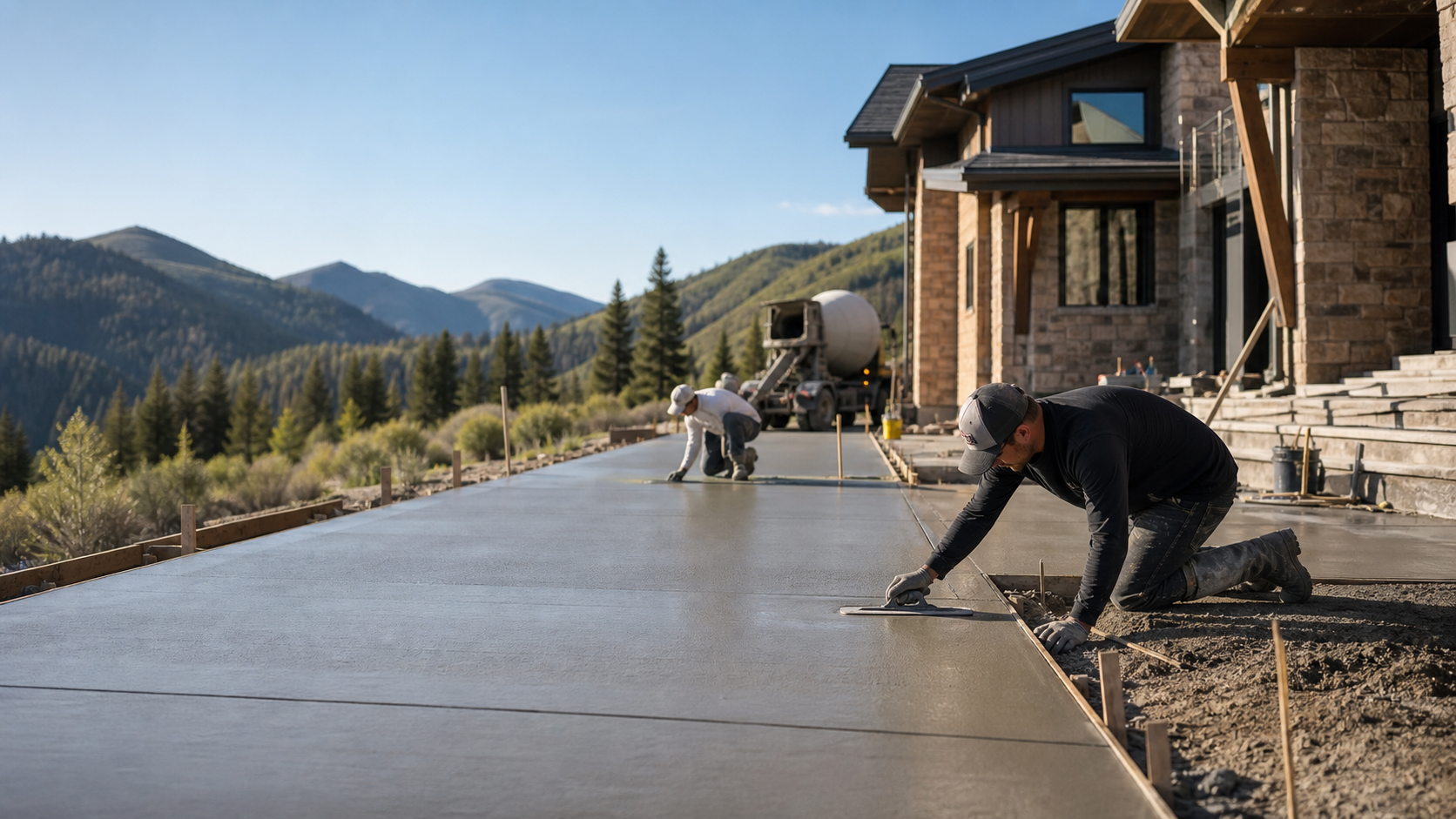
What affects the job
Concrete scope changes with demolition, forms, excavation, base prep, reinforcement, slab thickness, finish, drainage, access, pumping, weather, and whether the concrete is decorative, structural, or purely functional.
Details to gather before requesting pricing
Useful details include photos, rough measurements, site access, slope, drainage problems, existing concrete condition, finish preference, desired timeline, and whether engineering or permits may be involved.
Park City planning notes
Mountain properties can add steep driveways, tight equipment access, retaining needs, winter curing concerns, high-end finish expectations, and schedule pressure around remodels, rentals, and second-home visits.
Sort the concrete scope before asking for bids
Many Park City concrete requests start as one broad question, but the useful scope depends on what the slab or wall has to do. A concrete driveway may need tear-out, thicker edges, drainage correction, snow-removal wear planning, and a finish that handles deicer. A concrete patio may be more about grade, steps, transitions, decorative finish, and access through a landscaped yard. Basic concrete flatwork can still change quickly if the site needs pumping, compacted base work, or tight equipment staging.
Structural or high-visibility projects should be separated from simple slabs before requesting pricing. A foundation wall or retaining condition may involve engineering, excavation, drainage fabric, waterproofing, access for forms, and inspection timing. Decorative work such as stamped concrete should clarify pattern, color, control joints, sealing, sun exposure, and how the finish will meet doors, stone, decks, garages, or existing hardscape.
Before comparing concrete contractors, gather the address or neighborhood, photos from several angles, rough dimensions, grade changes, access constraints, demolition needs, desired finish, timing, and any drainage or cracking concerns. If cost is the first question, use the Park City concrete cost guide to separate size, prep, reinforcement, finish, pump access, tear-out, and curing-window factors. Then use the contractor questions checklist to ask about base prep, control joints, cold-weather placement, cleanup, scheduling, and who is responsible for site protection.
What a Park City concrete contractor should account for
Because Summit County sits well above 6,900 feet, most Park City concrete contractors design exterior mixes around elevation freeze-thaw exposure rather than a standard valley spec. Air-entrained concrete resists the repeated freeze-thaw cycling that cracks and spalls ordinary mixes over a few winters, and it matters for driveways, patios, walkways, and any flatwork that sees snow, ice, and deicer. A contractor who does not mention air entrainment, base depth, or control-joint spacing when discussing a Park City exterior pour is worth a follow-up question.
Custom homes are a large part of this market, and many properties sit inside HOA or resort communities such as Promontory, Deer Valley, and Canyons Village with design-review guidelines covering finish color, texture, drainage, and construction-traffic timing. A contractor familiar with these communities can usually anticipate review requirements before submitting a bid, which avoids delays once a project is already scheduled. Steep, view-oriented lots also make heated driveways and snowmelt systems a common upgrade; because the tubing has to be embedded before the pour, that decision needs to happen early. See the heated driveway and snowmelt guide for how that planning works.
The short mountain pour season is another local factor. Many batch plants and crews slow exterior scheduling once nighttime lows run consistently below freezing, which compresses the workable months compared to lower-elevation markets. Projects tied to a custom-home build, HOA-approved remodel, or rental turnover often need to be scheduled well ahead of the season they are targeting. A new construction concrete project on a custom home may involve foundation walls, garage slabs, driveways, and patios coordinated on one builder schedule, which is a different planning conversation than a single replacement slab.
Frequently asked questions
What makes a concrete contractor a good fit for Park City work?
Familiarity with elevation freeze-thaw mix design, HOA design-review processes in communities like Promontory and Deer Valley, steep-lot access, and the short mountain pour season. Ask how a contractor handles each of those before comparing price.
Do I need a specialist for heated driveways?
Snowmelt tubing has to be placed and pressure-tested before the pour, so it is worth confirming a contractor has installed hydronic or electric snowmelt systems before assuming any concrete crew can add one. See the heated driveway guide for planning questions.
How does HOA review affect scheduling?
Communities with architectural review can add weeks to a timeline before work starts, and some restrict construction traffic or noisy work to certain seasons or hours. Gathering HOA guidelines before requesting a quote helps a contractor scope the job correctly the first time.
Should new construction and repair requests be scoped differently?
Yes. New-build concrete is often coordinated with a general contractor's schedule across foundation, garage, driveway, and patio work, while repair or single-slab requests are usually standalone. Separating the two in a request helps a provider quote it accurately.
What should I gather before contacting a Park City concrete contractor?
Rough dimensions, site photos, access notes, slope and drainage details, desired finish, and timeline. The contractor questions checklist and concrete cost guide both help organize that information before a quote conversation.