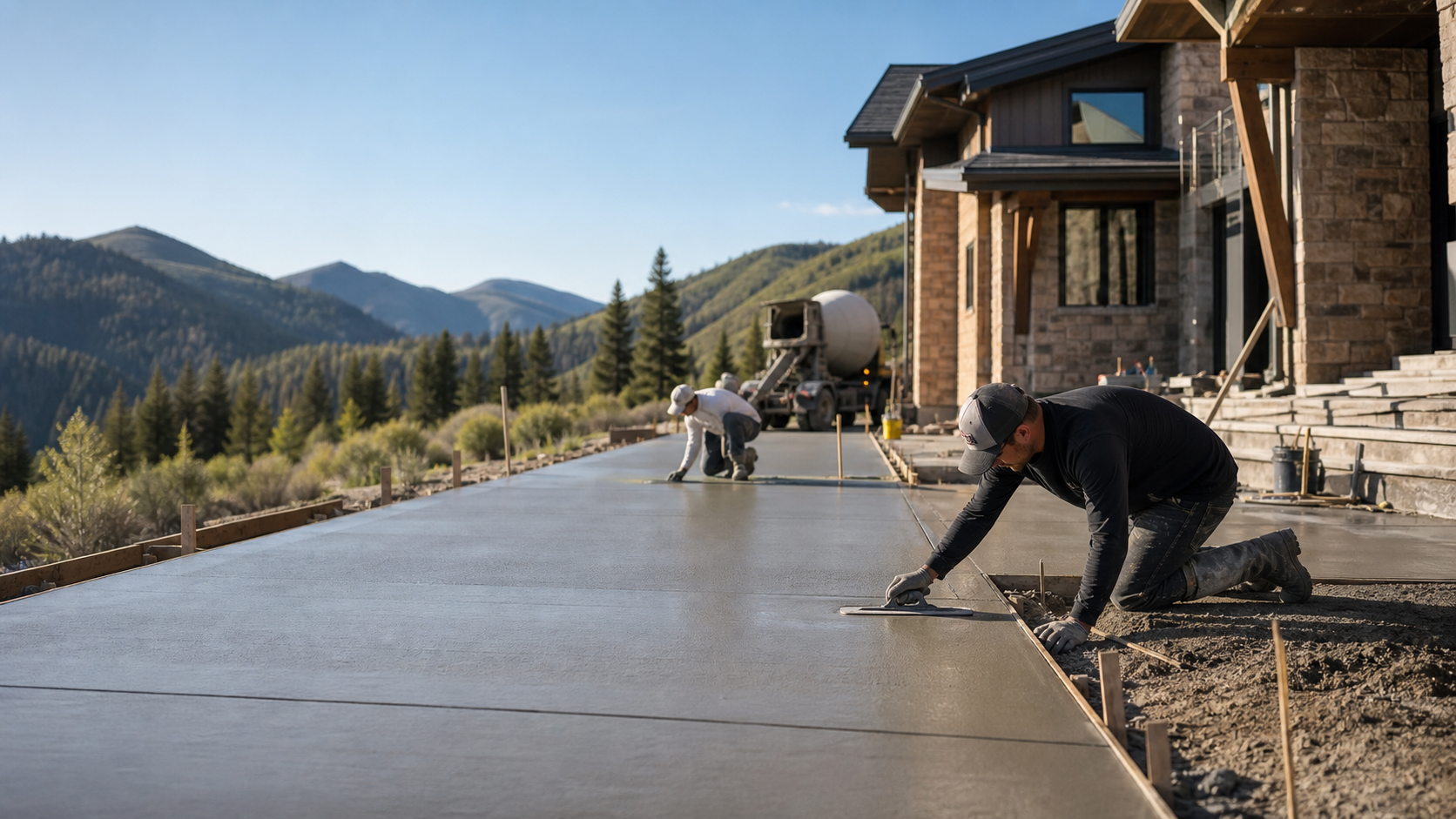
What affects the job
Concrete scope changes with demolition, forms, excavation, base prep, reinforcement, slab thickness, finish, drainage, access, pumping, weather, and whether the concrete is decorative, structural, or purely functional.
Details to gather before requesting pricing
Useful details include photos, rough measurements, site access, slope, drainage problems, existing concrete condition, finish preference, desired timeline, and whether engineering or permits may be involved.
Park City planning notes
Mountain properties can add steep driveways, tight equipment access, retaining needs, winter curing concerns, high-end finish expectations, and schedule pressure around remodels, rentals, and second-home visits.
Sealers and freeze-thaw maintenance
Stamped concrete relies on a sealer to protect the pattern, color, and texture, and that sealer takes more abuse in a high-elevation, freeze-thaw climate than in a milder one. Snow, ice, deicing salts, and repeated freezing and thawing can wear a sealer faster than typical maintenance schedules assume, so ask how often resealing is recommended for Park City conditions specifically, not a generic warm-climate answer. A sealer that is allowed to wear through can let moisture into the tooled joints of a stamped pattern, which accelerates surface damage over successive winters.
Pattern and slip resistance for outdoor use
Deep-relief stamped patterns can look striking but may hold more water and ice in the grooves than a shallower texture, which affects slip resistance on walkways, entries, and pool or hot tub surrounds. Adding an anti-slip additive to the sealer is common for high-traffic or entry areas in snow climates. Discuss both the visual pattern and how it performs underfoot once it is wet, icy, or covered in a light dusting of snow, not just how it looks in dry, warm-weather photos.
HOA and design-review considerations
Communities such as Promontory, Deer Valley, and Canyons Village often review decorative concrete color and pattern as part of architectural approval, since finish choices are visible from shared roads or neighboring properties. Checking HOA design guidelines before finalizing a stamped concrete color or pattern can prevent a redesign after a bid is already in hand.
Where stamped concrete fits on a mountain property
Stamped concrete tends to work best on patios, entries, courtyards, and pool surrounds where its decorative value is on display, while driveways and heavily plowed or shoveled areas often do better with a simpler broom finish that is easier to maintain and reseal. If a heated section is planned for an entry or patio, confirm the stamped finish and sealer are compatible with a snowmelt system before the heated driveway or snowmelt tubing is installed.
Color choices for high-altitude sun
Integral color and color hardeners can fade faster under intense high-altitude UV exposure than at lower elevations, so ask about the pigment system used and whether it is rated for long-term sun exposure. Darker colors also absorb more heat, which can accelerate snowmelt on a sunny patio but may show wear or fading sooner than lighter tones. Balancing color choice against both appearance and durability is worth discussing before committing to a specific stamped design.