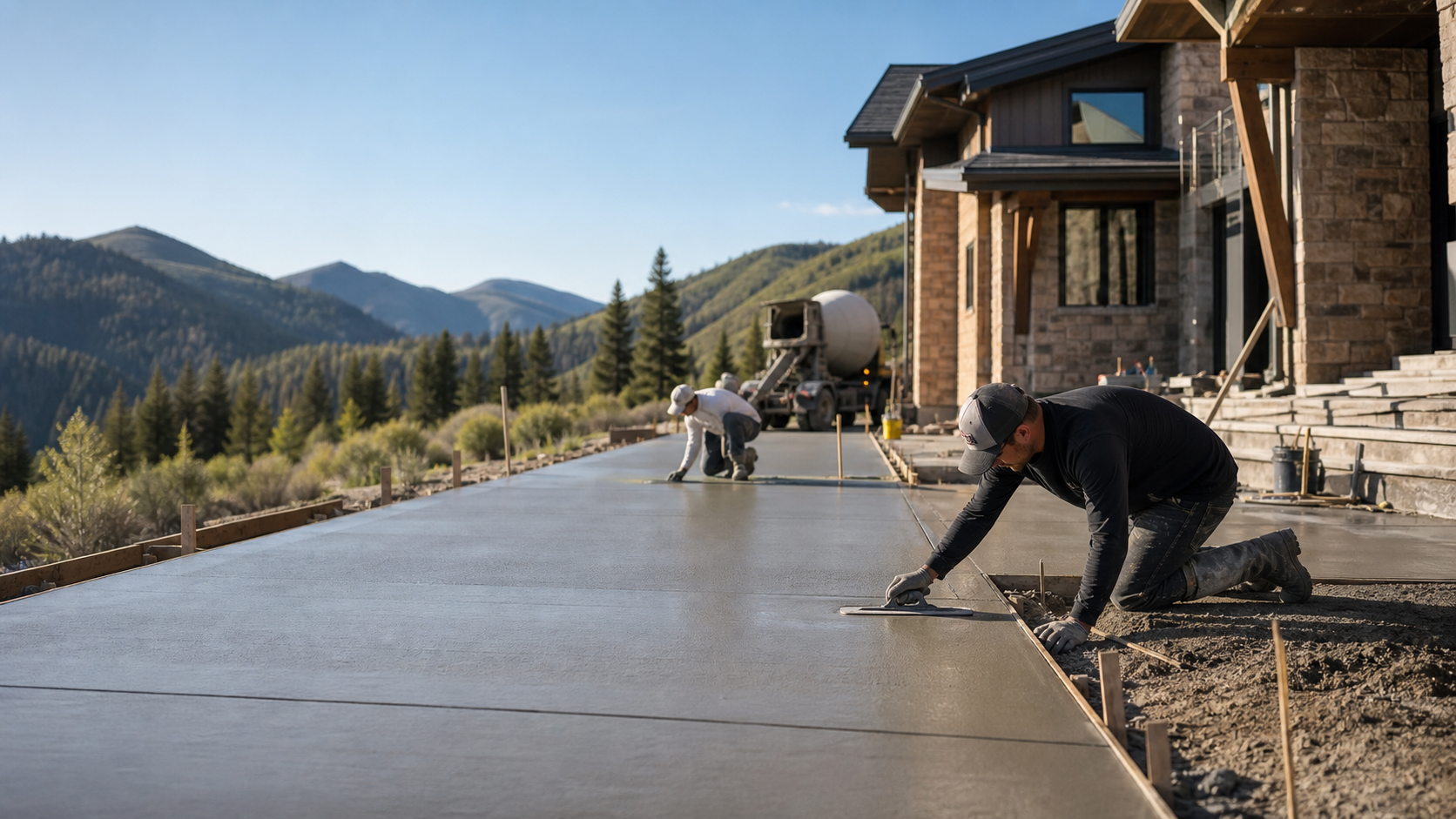
What affects the job
Concrete scope changes with demolition, forms, excavation, base prep, reinforcement, slab thickness, finish, drainage, access, pumping, weather, and whether the concrete is decorative, structural, or purely functional.
Details to gather before requesting pricing
Useful details include photos, rough measurements, site access, slope, drainage problems, existing concrete condition, finish preference, desired timeline, and whether engineering or permits may be involved.
Park City planning notes
Mountain properties can add steep driveways, tight equipment access, retaining needs, winter curing concerns, high-end finish expectations, and schedule pressure around remodels, rentals, and second-home visits.
Freeze-thaw damage is a common local cause
Concrete that was not built with air entrainment for freeze-thaw exposure is one of the more common repair triggers on Park City properties, since the elevation here means more annual freeze-thaw cycles than a comparable valley property. Surface scaling, spalling, and map-cracking are typical symptoms of freeze-thaw damage, and deicing salts can accelerate the process. Understanding whether the original mix caused the failure matters, because a repair or resurfacing on a slab that was never freeze-thaw resistant may fail again the same way without a mix change.
Repair, resurface, or replace
Small surface cracks and cosmetic spalling can sometimes be addressed with crack repair or resurfacing, while settlement, base failure, or structural cracking usually points to a full tear-out and repour. Mudjacking or slab-jacking can sometimes correct a settled slab without removing it, but only if the underlying soil and base are stable enough to hold the corrected position. A contractor should explain which category the damage falls into and why, not just quote a fix without diagnosing the cause.
Drainage as a root cause
Water is behind a large share of concrete failures on sloped Park City lots. Poor drainage, snow piled against a slab all winter, or a grade that channels runoff under a walkway or patio can undermine the base and cause cracking or settlement that looks unrelated to water at first glance. A repair that does not correct the underlying drainage problem often fails again within a few seasons, so ask whether the proposed fix addresses drainage or just the visible damage.
What to send with a repair request
Photos of the damage from multiple angles, the age of the concrete if known, when the damage first appeared, whether it has gotten worse, and any drainage or water issues nearby all help a provider judge repair versus replacement. If the damaged concrete is part of a larger area, such as a full driveway replacement versus a patch, say so up front so the estimate reflects the right scope.
Timing a repair around the season
Some repair methods, including crack sealing and resurfacing, need warmer, drier conditions to cure properly, which lines up with the same late-spring-through-early-fall window most exterior pours use. Damage discovered in winter often has to wait for a seasonal repair window unless the issue is a safety hazard, so documenting the problem with photos as soon as it appears helps get an accurate assessment scheduled for the next workable season.